
Microchip identification – microchips – unambiguous identification
The microchip (chip, transponder) is the basic component of an identification system.
A microchip is an electronic component capable of contactlessly transmitting to a reading device the code stored in the chip. The transponder consists of a housing, for example a bioglass capsule measuring 2 × 11 mm, or a ceramic cover of various sizes containing a receiving and a transmitting antenna and a diode matrix carrying the identification (ID) code. This code is generated by computer during manufacturing, and manufacturers guarantee that two or more microchips with the same identification code are not and will not be produced. Using a laser, the identification code is written to the diode matrix in the microchip. Therefore, in theory and in practice, two microchips with the same code should not occur. The microchip is passive, meaning it has no power source and thus does not need recharging or battery replacement. The energy required to transmit the code is obtained from the magnetic field emitted by the reading device (scanner, reader).
When identifying animals and objects, microchips should be used whose code cannot be changed (reprogrammed). Compatibility with reading devices worldwide is also necessary. In the EU this is ensured by the ISO standard.
The veterinary application of a microchip (sometimes called chipping) in animals is performed with a microchip applicator, comparable to a syringe, with the microchip placed in the applicator needle. A veterinarian or a person authorized by the veterinarian may implant the microchip in an animal (as permitted by law). Marking objects with a microchip is usually done by inserting the chip into the interior of the object or by gluing the microchip to a suitable place. These applications are carried out either by a professional service or by the owner of the item.
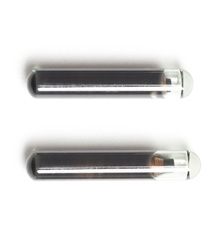
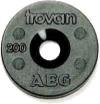

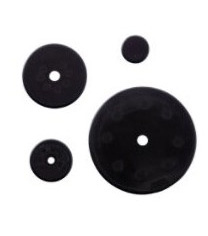
TROVAN microchips are suitable wherever unambiguous identification is required. They are resistant to common environmental conditions. Readability is guaranteed for a long time, even decades.
The Central Register of Animals and Property of the Czech Republic has very good experience with TROVAN microchips | Animal ID s.r.o.. These microchips comply with ISO standards and are an approved veterinary device in the Czech Republic (EU). Animals and objects marked with any microchip can of course be registered in the Central Register of Animals and Property of the Czech Republic.
The Central Register of Animals and Property of the Czech Republic does not keep microchips in stock, but we can supply them as part of equipping a complete workplace for the identification of animals or items. If you are interested in purchasing microchips, click the logo of Animal ID s.r.o. and order microchips directly from the distributor. You will thus receive the microchips straight from the source and in the shortest possible delivery time.
Above are typical TROVAN microchips shown for illustration; request detailed technical and commercial information from their supplier.